
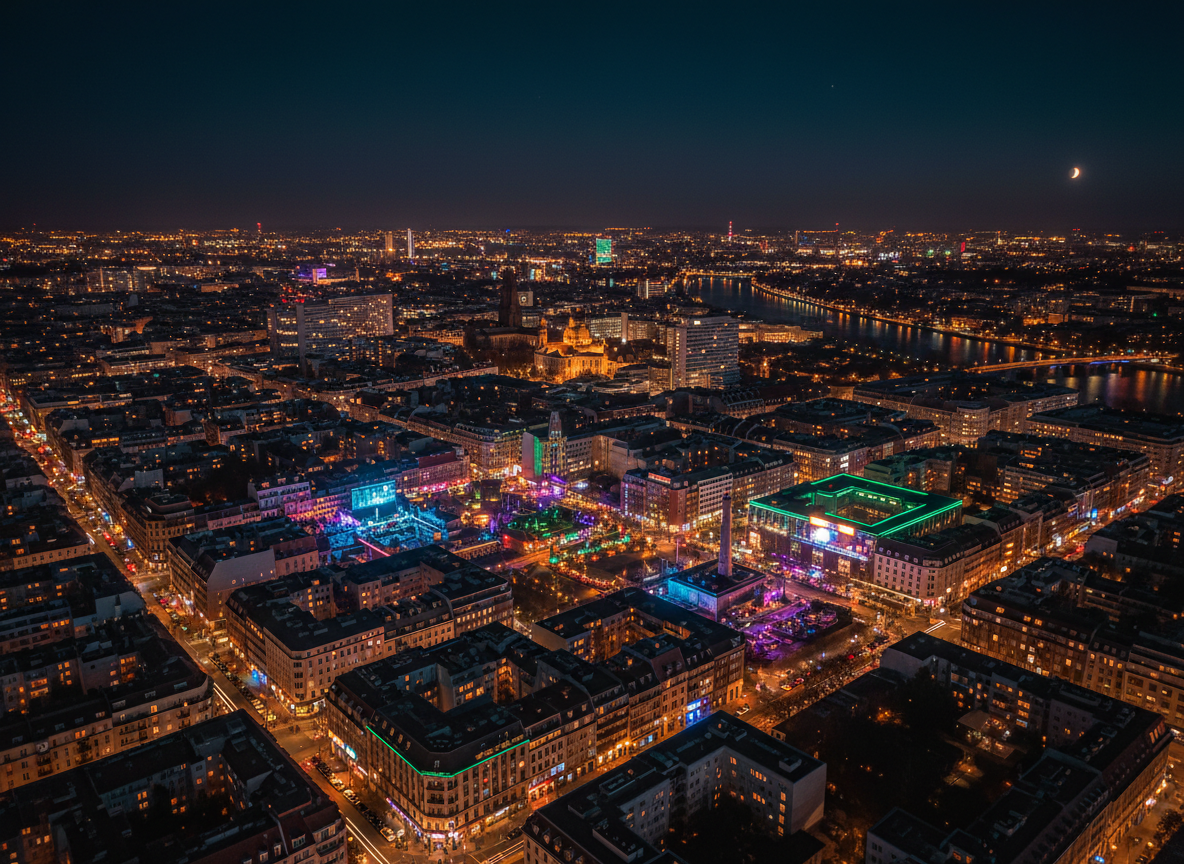
The map of nightlife is being redrawn.
For decades, the nightlife world revolved around a handful of cities. Ibiza. Berlin. London. Amsterdam. These were the capitals, the places where trends were born and DJs were made. If you weren't playing there, you weren't playing anywhere that mattered.
That era is ending. And what's replacing it is far more interesting.
The rise of the unexpected scenes
Tbilisi. São Paulo. Beirut. Johannesburg. Bucharest. Seoul. These cities aren't waiting for permission from the traditional nightlife establishment. They're building their own scenes from scratch — with their own sounds, their own rules, and their own audiences.
Bassiani in Tbilisi became one of the world's most respected clubs without any connection to the Ibiza circuit. São Paulo's underground scene produces DJs who fill 5,000-person warehouses every weekend — and most Europeans have never heard their names.
The talent is global. The infrastructure isn't. That's the gap.
Why local scenes stay local
A DJ in Bucharest can pack a 400-person club every Saturday. But when a promoter in Barcelona is looking for fresh talent, they'll never find her. She doesn't have a London agent. She doesn't have a Boiler Room set. Her proof of impact exists only in the memories of the people who were in the room.
This is the fundamental problem: nightlife talent is distributed globally, but the systems for discovering and validating that talent are still stuck in a handful of cities.
Word of mouth doesn't cross borders efficiently. Instagram algorithms don't care about crowd retention rates. And the traditional booking networks are closed loops that protect incumbents.
What these scenes need isn't promotion — it's proof
The DJs in these emerging scenes don't need more followers. They need a way to prove what they do in a room — in a language that bookers, promoters, and venues in other cities can understand.
They need data that travels. Verified performance metrics that work the same way whether you're in Munich or Melbourne, Lagos or Lisbon.
That's what makes the next phase of nightlife different from every phase before it. For the first time, there's a possibility of building a global meritocracy — where the DJ in Tbilisi and the DJ in Berlin compete on the same playing field.
The cities we're watching
We started in Munich. Not because it's the biggest scene — because it's the right size to prove the model. Dense enough to generate meaningful data. Small enough to move fast.
But the vision was never one city. Every city with a nightlife scene has the same problem: invisible talent, uninformed bookings, and fans who don't know what they're missing.
The next nightlife boom won't start in Ibiza. It'll start wherever someone finally builds the infrastructure to connect talent with demand — globally, transparently, and based on what actually happens in the room.
We think that infrastructure is Tonayt.
Be part of the movement.
Download Tonayt — Free